Snook Fishing in Pine Island
The ultimate structure fish. Elusive, powerful, and built like a torpedo—the snook is the reason anglers spend hours working a single dock line.
Snook fishing in Pine Island peaks from spring through early fall, when water temperatures stay above 70 degrees. These fish are strictly structure-oriented—think docks, bridges, mangrove roots, and channel edges. An 8- or 9-weight fly rod handles most situations, and the fight is all about pulling a 20-pounder away from the barnacles.
Snook
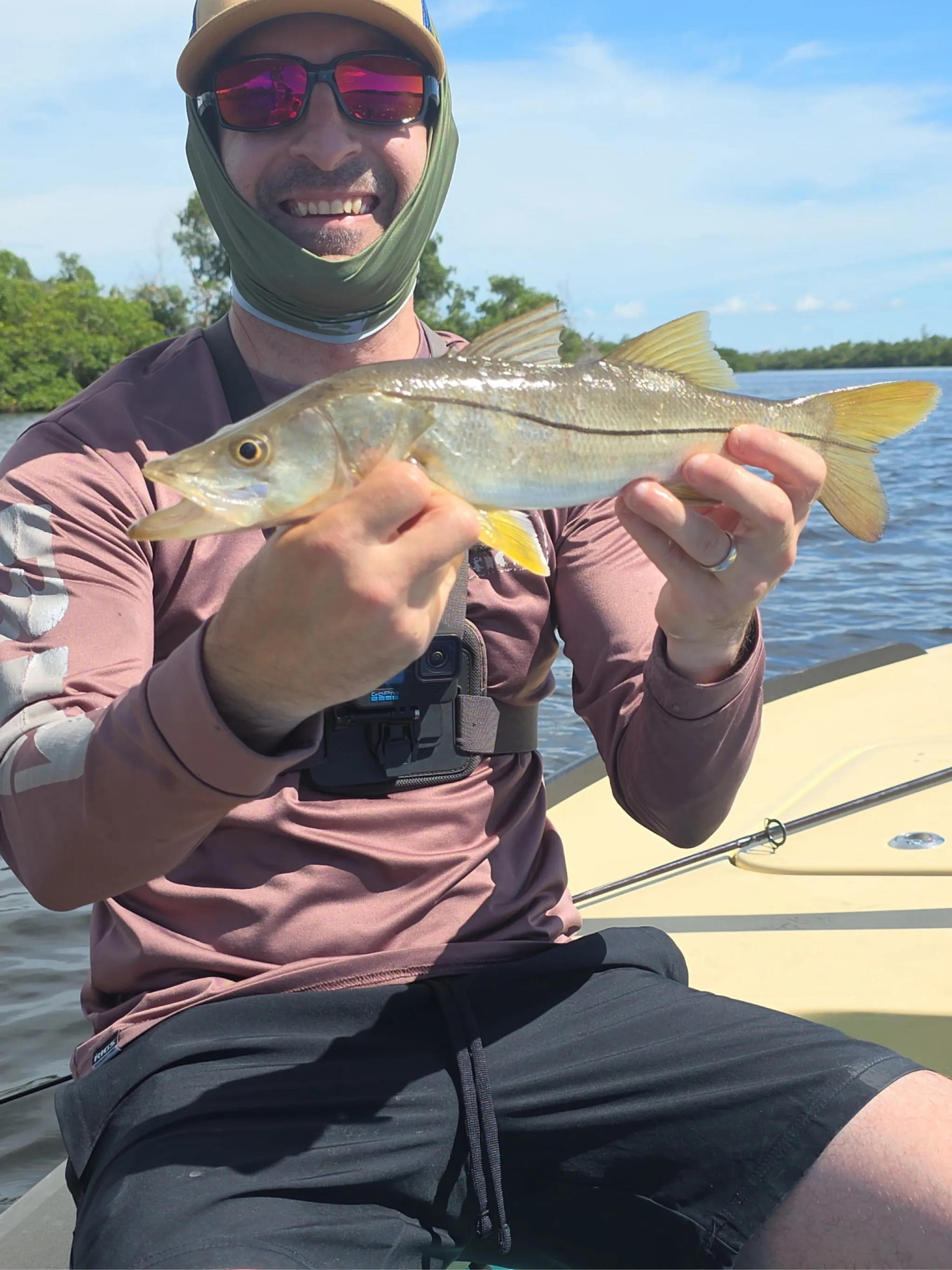
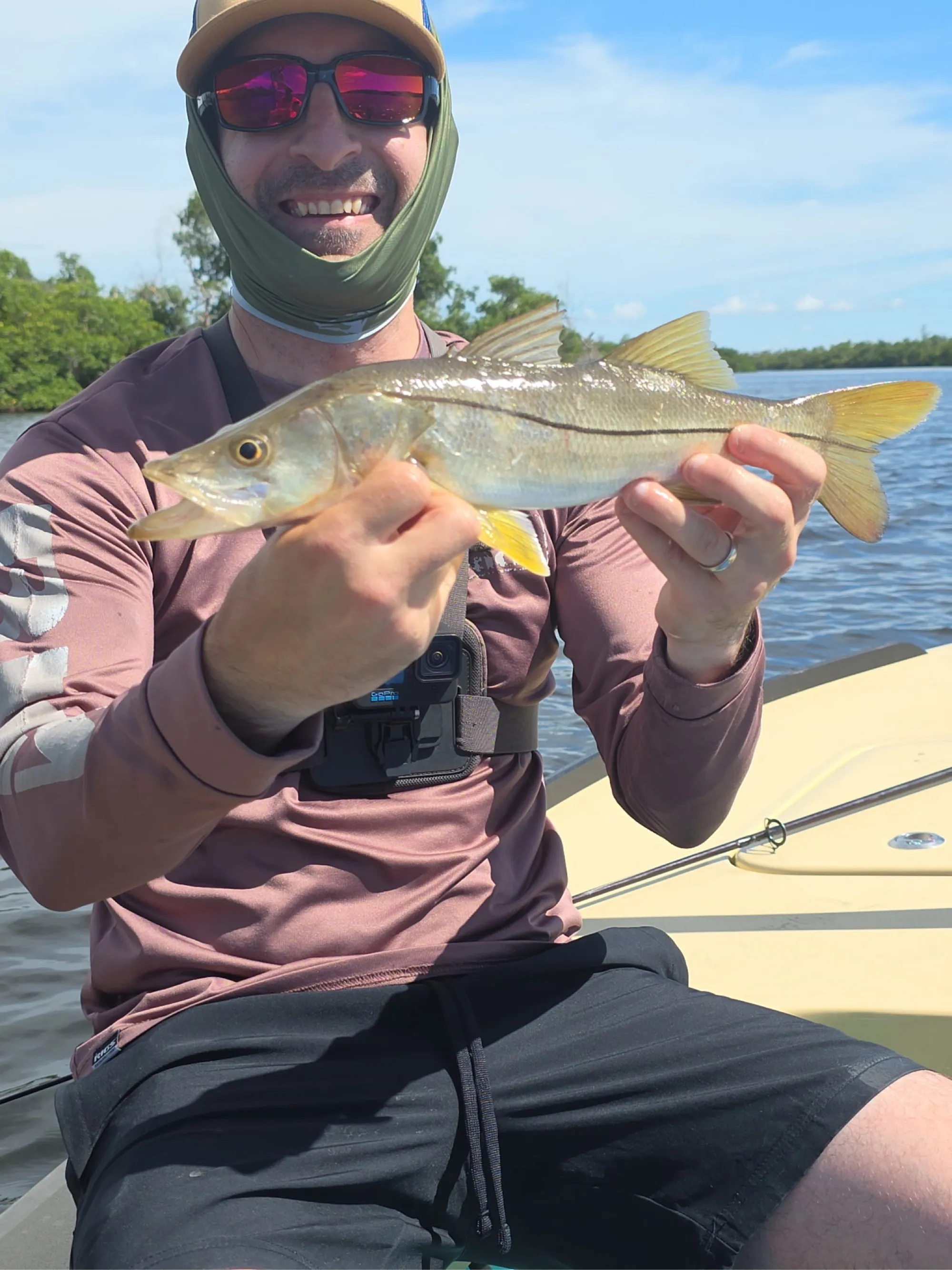
Snook are the quintessential inshore predator. Their sloping forehead, distinct lateral line, and elongated body give them a unique profile among Florida's game fish. They're ambush predators, lurking in the shadows of structure and exploding on prey that wanders too close. Baitfish and crustaceans make up the bulk of their diet, though they'll eat whatever's available.
The challenge with snook is their temperature sensitivity. They cannot tolerate water below about 60 degrees, which limits their range and season in our area. Spring warming brings them out of the deep holes and into the shallows, where they feed aggressively to recover from winter. This makes April through June prime time. Summer offers consistent action, though the heat can make early morning trips essential.
Structure is everything with snook. A single dock pilings can hold a fish for days. The key is precise presentation—drop the fly close to the target, let it sink, and then impart a subtle strip. Snook often follow before committing, so patience is part of the game. When they do strike, the fight is explosive, with snook making long, powerful runs and shaking their heads violently to throw the hook.
Snook Fishing FAQ
Why are snook hard to catch?
What's the best time of day for snook?
Do I need a license to target snook?
Ready to Get on the Water?
Dates fill up fast in season. Reach out to Rescue Fly Charters to lock in your charter.